Free Quote
There’s a very specific kind of panic that hits when you’re standing in your backyard in Mona Vale or Avalon, staring up at a gum tree the size of a small apartment block, wondering if it’s about to introduce itself to your roof. Maybe it dropped a limb the size of a surfboard in last week’s storm. Maybe your neighbour’s fig has decided your side fence looks like a nice place to put down roots — literally. Either way, you’re now Googling things like “tree removal Northern Beaches” at 10pm, which is exactly how you ended up here.
Good news: you’re in the right postcode for this problem. Bad news: the Northern Beaches is also one of the trickiest places in Sydney to get tree work done properly, because between the Tree Preservation Order, council permits, heritage overlays and a coastline full of gorgeous-but-fragile native canopy, there’s a lot more to “just cutting the tree down” than meets the eye.
This guide walks through everything — arborists, removal, pruning, lopping, mulching, stump grinding, emergency call-outs, land clearing and what to do with the green waste mountain afterwards — the way a mate in the industry would explain it over a beer, not the way a council pamphlet would.
So, Do You Actually Need an Arborist Northern Beaches Wide, or Can You DIY It?
Short answer: if the tree is taller than you on a ladder, the answer is “call someone.” Longer answer: it depends on the species, the size, and whether your property sits in a heritage conservation area.
Here’s the bit almost nobody explains clearly enough. Trees and vegetation across the region are protected under state planning policy, which means most tree work — even on your own block — technically needs council sign-off. As a rule of thumb, trees under 5 metres, certain exempt species, or dead and hazardous trees can often be dealt with without a permit, while anything bigger, healthier, or heritage-listed will need a proper application, usually backed by an arborist’s report. Pruning has its own limit too — generally you can trim up to 10% of a tree’s canopy in any 12-month period before you need approval, and that trim needs to follow proper Australian pruning standards rather than the “hack it back with the hedge trimmer” method.
This is where a qualified, insured team like Northern Beaches Garden & Trees earns its keep — not just swinging a chainsaw, but knowing which species are exempt, which trees need paperwork, and how to keep you on the right side of council so you’re not explaining yourself to a compliance officer next month. If you’re not sure what category your situation falls into, it’s worth a browse through our tree services page before you pick up a saw yourself.
Tree Removal Northern Beaches Style: When a Tree Really Does Need to Go
Removal is the nuclear option, and a decent arborist will always tell you when it isn’t necessary — but sometimes it genuinely is. Storm-damaged trees, trees with root rot, trees leaning at an angle that makes your insurance broker nervous, or species that are simply outgrowing a suburban block near powerlines and foundations — these are the calls where felling makes sense.
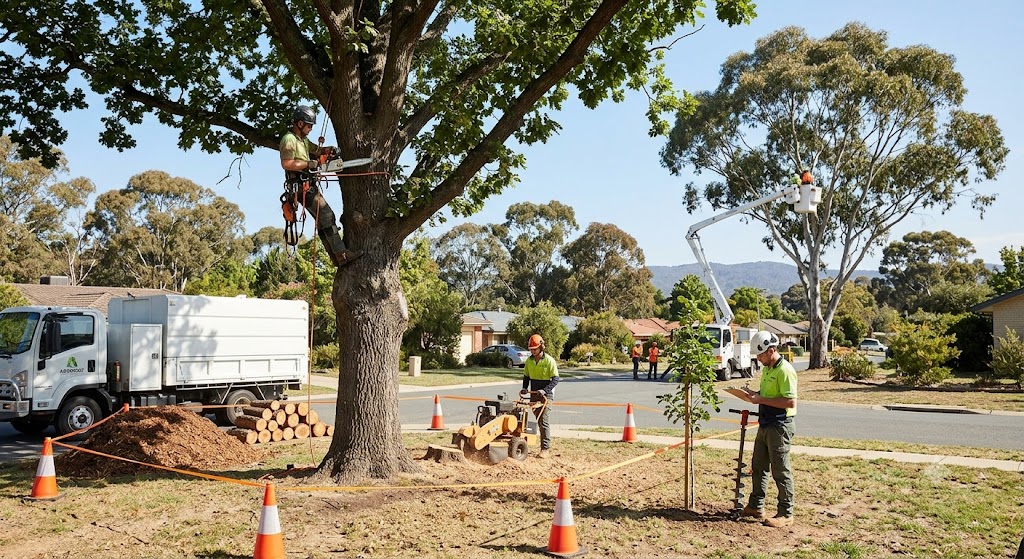
The Northern Beaches throws in extra complexity here because of narrow driveways, steep coastal blocks, overhead wires and neighbouring properties packed in close. A cowboy operator with a chainsaw and no rigging plan is how trees end up through pergolas on the six o’clock news. Proper removal involves assessing drop zones, sectioning the tree in controlled cuts, sometimes crane or rigging work for tight sites, and full clean-up so you’re not left with a driveway that looks like a woodchipper exploded (unless that’s genuinely what you asked for). Our full breakdown of the process is on the tree removal and felling page, including how we handle the tricky access blocks that make North Shore and Northern Beaches properties their own special kind of fun.
Tree Pruning Northern Beaches Homeowners Actually Need (Not Just a Haircut)
Pruning gets treated like a cosmetic afterthought, but it’s arguably the most important preventative tree work there is. Regular, correctly-done pruning keeps canopies healthy, reduces the chance of limb failure in wind, improves airflow (handy for humid coastal microclimates that breed fungal issues), and can genuinely add years to a tree’s life.
There’s an art to it, too. Crown thinning, crown lifting, deadwooding, formative pruning for younger trees — a good arborist reads what the tree needs rather than applying one technique to everything with a hedge trimmer and a prayer. Over-pruning (“topping”) stresses trees, encourages weak regrowth, and can actually make them more dangerous down the track, not less. If your gum tree is dropping branches onto the trampoline every time the nor’easter picks up, it’s not being dramatic — it probably needs a proper assessment. More detail on how we approach this is on our pruning and trimming page.
Tree Lopping Northern Beaches: Necessary Fix or Old-School No-No?
Let’s clear up some confusion, because “lopping” gets thrown around loosely. True tree lopping — indiscriminately hacking off large branches or tops without regard for the tree’s structure — is generally considered bad arboricultural practice these days, and can actually breach council conditions if done without proper technique or approval. What most people actually mean when they say “lopping” is controlled height and canopy reduction, done correctly, for a specific reason: clearance from powerlines, reducing wind sail on an exposed coastal block, or opening up a view that’s slowly been swallowed by growth (a very Northern Beaches problem, if we’re honest).
The difference between old-school lopping and modern reduction pruning is basically the difference between a butcher and a surgeon. One leaves the tree structurally compromised and ugly for years; the other leaves it healthier and better shaped. Have a look at our approach on the tree lopping page if you want the specifics.
Stump Grinding: The Bit Everyone Forgets to Budget For
You’ve had the tree removed. Great. Except now there’s a stump sitting in the middle of the lawn like a tripping hazard with a grudge, slowly sprouting suckers and inviting termites over for a housewarming. Stump grinding chews the stump down below ground level so you can turf over it, plant something new, or just stop stubbing your toe on it every summer.
It’s a separate job from removal (worth checking your quote covers it, because plenty of cheaper operators quietly leave it out), and it makes a genuine difference to resale-ready gardens across Manly, Freshwater, Dee Why and beyond. Details are on the stump grinding page.
Tree Mulching and Woodchipping: Turning “Rubbish” Into Free Garden Gold
Here’s the part that makes tree work feel slightly less wasteful: all those branches and offcuts don’t have to go to landfill. Mulching and woodchipping turns removed timber into usable garden mulch — great for moisture retention, weed suppression and feeding the soil, which matters a lot on sandy Northern Beaches soil that dries out faster than you’d like every summer. Plenty of jobs wrap up with a pile of fresh mulch left behind for your garden beds, which is a nice little silver lining after watching a tree come down. Have a squiz at our mulching and woodchipping page for how it works.
Emergency Tree Services: For When the Tree Doesn’t Wait for Business Hours
Storms don’t check your diary, and the Northern Beaches gets its fair share of them — hail, east coast lows, king tides and the wind events that come with living somewhere this exposed and this beautiful. A branch through the carport or a tree leaning dangerously over the driveway after a storm isn’t a “get a few quotes next week” situation; it’s a right-now situation.
An emergency crew that actually turns up (rather than one that says “we’ll try to squeeze you in Thursday”) is worth having saved in your phone before you need it, not after. If you’re dealing with storm damage right now, jump straight to the emergency tree services page rather than reading the rest of this over a cuppa.
Land Clearing and Site Preparation: Getting Blocks Building-Ready
Whether it’s a renovation, a new build, a granny flat, or just reclaiming an overgrown back corner that’s turned into an accidental nature reserve, land clearing needs the same council-savvy approach as removal — arguably more, since development sites attract extra scrutiny. A crew that understands both the practical clearing work and the regulatory side saves you from expensive surprises mid-build. That’s covered in depth on our land clearing and site preparation page.
Rubbish Removal: Because Someone Has to Deal With the Aftermath
Green waste, old timber, garden debris from a big clean-up — it all has to go somewhere and “somewhere” shouldn’t be your nature strip for three weeks waiting on a council pickup. Bundled in with tree work or booked separately, proper rubbish removal means you’re left with a tidy block, not a mess to sort out yourself on the weekend. More info is on the rubbish removal page.
Why Locals Choose Northern Beaches Garden & Trees
There’s no shortage of blokes with a ute and a chainsaw advertising on Facebook Marketplace. What actually matters is insurance, qualifications, council know-how, and a crew that leaves your place looking better than they found it. Northern Beaches Garden & Trees has built a reputation across the peninsula for exactly that — straight quotes, no surprise add-ons, and a genuine understanding of the coastal conditions, sandy soils and council requirements that make this patch of Sydney unlike anywhere else.
If you’d rather see the work than take our word for it, have a look through our completed jobs in the portfolio, or check the blog for seasonal tips on keeping your garden and trees in shape. And if you’ve read this far and you’ve still got a tree looming over your gutter, just get in touch through our contact page — a quick photo and a chat is usually all it takes to get you a proper quote.
FAQs: Northern Beaches Tree Work, Answered Straight
Do I need council approval to remove a tree on my own property? Often, yes. Trees over roughly 5 metres, non-exempt species, or anything in a heritage conservation area generally need a permit, sometimes backed by an arborist’s report. Dead, hazardous or genuinely exempt species can usually be removed without one, but it pays to check before you cut.
How much canopy can I prune without a permit? As a general guide, up to 10% of a tree’s canopy within a 12-month period, provided the pruning follows proper Australian pruning standards. Anything beyond that generally needs approval.
Is tree lopping even legal? Uncontrolled lopping that damages a tree’s structure can breach council conditions. What’s usually fine — and often required for safety or clearance — is properly executed canopy or height reduction carried out by a qualified arborist.
What happens to my tree once it’s removed? Most of it can be mulched or woodchipped on-site, giving you free mulch for garden beds, with the rest cleared away as rubbish removal so you’re not left staring at a pile of logs.
How quickly can you get to a storm-damaged tree? Emergency jobs are treated as priority call-outs, not “next available booking.” If a tree’s come down or is hanging dangerously, get in touch straight away rather than waiting.
Do you handle the council paperwork for me? A good arborist can identify whether your tree is exempt or needs a permit and help prepare the supporting documentation — it’s worth asking about this upfront so nobody’s caught out mid-job.
What areas do you cover? From Manly and Freshwater through to Mona Vale, Avalon, Palm Beach and everywhere in between across the Northern Beaches and North Shore.
Trees are one of the best things about living on the Northern Beaches — right up until one of them decides to fall through your pergola. A bit of local know-how, the right permits, and a crew that actually knows a River Oak from a Camphor Laurel goes a long way toward keeping it that way.