Free Quote
Let’s be honest with each other for a second. That massive gum tree hanging over your garage — the one you’ve been “keeping an eye on” since the last big storm — isn’t going to sort itself out. Trees don’t send apology texts before they drop a branch through your pergola. They just do it, usually at 2am, usually during the one week you left the outdoor furniture out.
If you live anywhere between Mosman and Manly, Chatswood and Terrey Hills, you already know the North Shore and Northern Beaches have two things in abundance: gorgeous, established greenery, and homeowners who have absolutely no idea what to do with a chainsaw beyond looking dangerous holding one. And that’s fair enough — you’re not meant to know. Tree work sits in that rare category of home maintenance where “having a go yourself” can genuinely end in an ambulance, a very awkward call to your insurer, or a very annoyed neighbour with a dented Colorbond fence.
This guide runs through the full lifecycle of tree care — when to remove, when to prune, what actually happens to all that wood once it’s on the ground, and why “she’ll be right” is not a tree management strategy. Grab a cuppa, this one’s a decent read.
When a Tree Stops Being an Asset and Starts Being a Liability
Trees add value to a North Shore property. Real estate agents love a leafy street, buyers love shade in January, and honestly, so do we. But there’s a tipping point where a tree flips from “lovely feature” to “structural risk,” and most homeowners miss the signs because, well, why would you know what a co-dominant stem or included bark looks like?
Some giveaways worth taking seriously: fungus growing at the base (a classic sign of internal rot), large dead limbs sitting in an otherwise healthy canopy, a noticeable lean that’s gotten worse since last summer, or roots that are starting to lift paving and crack foundations. Any of those, and it’s time for a proper look rather than a guess from the driveway.
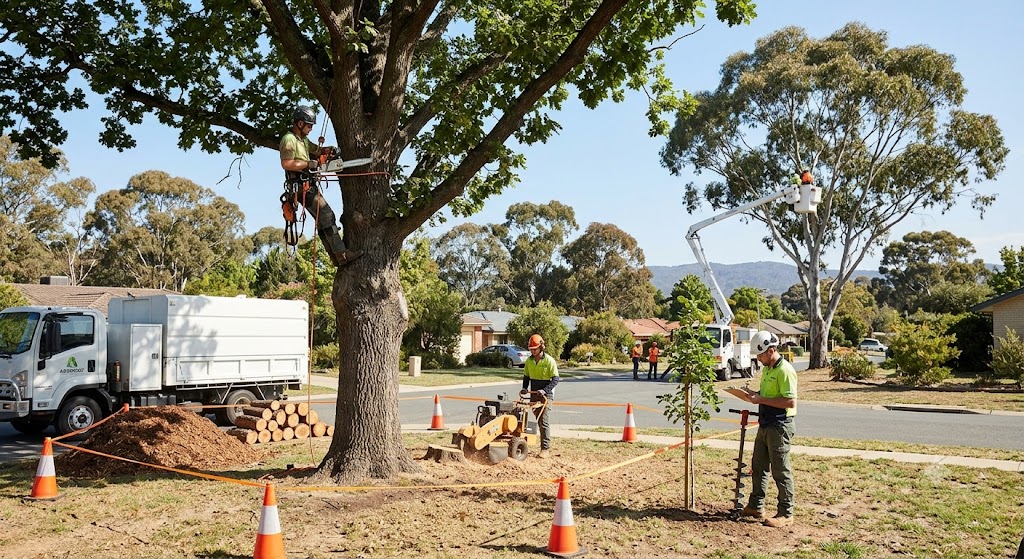
This is where a genuine, experienced tree removal specialist earns their keep — not just swinging a chainsaw at anything vaguely tall, but actually assessing whether the tree can be saved, needs reducing, or genuinely has to come down. The team handling tree removal and felling across the North Shore and Northern Beaches deal with everything from a single dying jacaranda in a Wahroonga backyard to full-scale felling jobs on tight, sloped Northern Beaches blocks where a crane is genuinely the only sane option.
One thing worth flagging before you even pick up the phone: several North Shore councils require approval before a significant tree comes down, depending on species, size, and whether it’s on a heritage list or protected under a local tree preservation order. Skipping this step isn’t just risky; it can land you a fine that makes the removal cost look cheap. A properly established local outfit will know exactly which trees need council sign-off and which are exempt — which saves you from becoming an accidental local celebrity for the wrong reasons.
Pruning, Trimming, Lopping — Yes, They’re Actually Different Things
Here’s a pub-trivia fact that’ll surprise absolutely nobody except every homeowner who’s ever asked for a “quick lop”: tree lopping and tree pruning are not the same job, and using the wrong one on the wrong tree can do genuine long-term damage.
Pruning and trimming is the considered, careful stuff — selectively removing dead, diseased or crossing branches to improve the tree’s shape, encourage healthy new growth, and reduce the weight sitting on structurally weak limbs. It’s basically a haircut done by someone who actually studied hairdressing, as opposed to someone with garden shears and unearned confidence. If your trees are looking a bit wild, encroaching on the neighbour’s washing line, or just need a health check before storm season, tree pruning and trimming is the move.
Lopping, on the other hand, is the heavier-handed approach — removing large sections or entire limbs, usually where a tree has become a genuine hazard, has outgrown its space dramatically, or needs serious reduction fast. Done properly by people who know what they’re doing, professional tree lopping services can bring an overgrown monster back under control without killing it. Done badly by a bloke with a ute and a Facebook Marketplace ad, it can leave a tree stressed, unstable, and honestly uglier than before you started.
The general rule: if you’re maintaining a healthy tree’s shape and wellbeing, that’s pruning. If you’re wrestling back control of something that’s gotten seriously out of hand or dangerous, that’s lopping territory. A good arborist will tell you which one your tree actually needs — and won’t just reach for the bigger saw because it looks more impressive.
So What Happens to All That Wood?
This is the bit most guides skip entirely, which is a shame because it’s genuinely useful to know. Once a tree comes down, you’re not left with a pile of logs and a guilty conscience about landfill — the timber, branches and offcuts get run through a chipper and turned into mulch.
And that mulch isn’t wasted; it goes straight back into garden beds to retain moisture, suppress weeds, and slowly break down into nutrients for the soil — basically the tree giving back to the neighbourhood on its way out. If you’ve got garden beds crying out for a top-up, or you’re doing a broader property clean-up, wood chipping and mulching services turn what would otherwise be a truckload of green waste into something your camellias will genuinely thank you for. It’s one of those quietly satisfying parts of the job — nothing gets wasted, and your garden ends up better off than before the chainsaw ever showed up.
Clearing the Block: Site Prep without the Headaches
If you’re planning a renovation, a pool install, a granny flat, or you’ve just bought a block on the Northern Beaches that looks more like a rainforest than a backyard, you’ll need proper site clearing before any builder will touch it. This is a different beast to a standard tree removal — it usually involves multiple trees, dense scrub, stumps, and sometimes overgrown areas that haven’t seen a whipper snipper since the Howard government.
Professional land clearing and site preparation means the block gets cleared efficiently, safely, and in line with council vegetation requirements — which matters a lot more than people realise, because builders and certifiers will absolutely hold up your project over an unresolved tree issue. Getting this right at the start saves weeks of delays later, and honestly, a clean block just makes the whole build feel real.
Don’t Forget What’s Left Behind: The Stump Situation
Removing a tree is only half the job. What’s left is a stump — and stumps are stubborn. They trip people up, they’re an absolute pain to mow around, and left alone, some species will happily send up new shoots for years, basically refusing to accept they’ve been broken up with.
Stump grinding chews the stump down below ground level so you can turf over it, replant, or just stop stubbing your toe on it every single morning. It’s a small job in the scheme of things but it’s the difference between a properly finished tree removal and one that leaves an ugly reminder sitting in the middle of your lawn for the next decade.
The Cleanup Nobody Wants to Do Themselves
Tree work generates mess — branches, leaves, offcuts, sawdust, the works. Somebody has to deal with all of it, and realistically, that somebody shouldn’t be you spending your Sunday loading a trailer. A proper garden and green waste removal service means the crew doesn’t just cut and run — they leave the property looking better than when they arrived, with everything hauled away and disposed of or recycled properly. It’s a small detail, but it’s exactly the kind of thing that separates a professional outfit from a bloke with a chainsaw and questionable public liability insurance.
When It Genuinely Can’t Wait
Storms don’t check the calendar before they roll through the Northern Beaches, and when a tree comes down across a driveway, onto a roof, or dangerously close to power lines, “we’ll get to it next week” isn’t an option. This is where emergency tree services earn every cent — rapid response, safe removal of hazardous limbs or fallen trees, and getting your property secure again without the multi-week wait that standard bookings involve. If a tree’s threatening your house, your car, or your ability to get out the driveway, that’s a same-day problem, not a someday problem.
Why Locals Actually Matter Here
There’s a reason a genuinely local, family-run crew tends to outperform the big interstate franchises when it comes to North Shore and Northern Beaches tree work — they actually know the councils, the tree preservation orders, the steep driveways in Killara, and the impossible-access backyards in Avalon that make some jobs a genuine logistical puzzle. A & A Aarons Garden & Tree has been doing exactly this across the North Shore and Northern Beaches for over two decades, working out of Forestville and covering everything from a single overgrown hedge to full commercial site clearing.
If you want a sense of what “done properly” actually looks like, the completed projects gallery is worth a scroll — real jobs, real properties, not stock photography of suspiciously photogenic chainsaws. And if you’re the type who likes to read up before committing to anything (no judgement, we did tell you to grab a cuppa earlier), there’s a growing library of local tree and garden advice worth bookmarking.
Frequently Asked Questions
Do I need council approval to remove a tree on the North Shore? Often, yes. Most North Shore and Northern Beaches councils have tree preservation controls, and approval requirements depend on the species, trunk diameter, and whether the tree sits on a significant vegetation register. Some exemptions exist for dead, dying, or genuinely hazardous trees, but it’s not worth guessing — an experienced local team will know the local rules and can guide you through it.
How much does tree removal cost in Sydney? It varies a fair bit depending on the tree’s height, trunk diameter and species, how accessible it is, and whether a crane or traffic control is needed. A tree in an open backyard is a very different job to one wedged between two houses on a steep block. The only honest answer is to get a proper on-site quote rather than trust a number pulled from a search result.
What’s the difference between tree lopping and tree pruning? Pruning is selective, careful branch removal to maintain a tree’s health and shape. Lopping is a heavier reduction, typically used when a tree has become hazardous or seriously overgrown. Both have their place — the trick is knowing which one your tree actually needs.
Can I keep the wood chips or mulch from my tree removal? Usually, yes — just ask when booking the job. It’s a great, free way to top up garden beds, and it saves the crew a trip to the tip, which is a win for everyone involved.
How quickly can someone come out for a fallen tree after a storm? Genuine emergency tree services aim to respond same-day for hazardous situations — trees on roofs, blocking driveways, or leaning on power lines. Standard pruning or removal bookings will usually have a slightly longer lead time, so it pays to book ahead of storm season rather than during it.
Do you service the whole North Shore and Northern Beaches, or just certain suburbs? A properly established local team will typically cover the full stretch — from Mosman and Chatswood through to Terrey Hills, Forestville, Frenchs Forest, and out to Manly and Avalon. If you’re unsure whether your suburb’s covered, it’s always worth a quick call.
The Bottom Line
Trees are one of the best things about living on the North Shore or Northern Beaches — right up until one of them decides to become a problem. The good news is that every stage of dealing with that, from the first inspection through to hauling away the last wheelbarrow of mulch, is a solved problem when you’ve got the right crew doing it.
If there’s a tree on your property that’s been quietly worrying you for the last six months, that’s usually your cue. Have a chat, get it looked at properly, and stop losing sleep every time the wind picks up. You can get in touch with the team here for a free, no-pressure quote — or just to finally get a straight answer on whether that tree’s actually fine, or whether it’s plotting something.