
Free Quote
Let’s be honest about something the glossy garden magazines won’t tell you: half the gardens on the Northern Beaches look incredible for exactly one season. Then the sandy soil drains the life out of the new turf, the retaining wall starts leaning like it’s had one too many at the Newport pub, and the “low maintenance” native bed turns into a jungle that eats the letterbox.
We’ve been fixing that story for years. Not because Northern Beaches homeowners don’t care about their gardens — quite the opposite, everyone here wants an outdoor space that matches the lifestyle, the ocean views, the barbecues that somehow start at 11am and finish well after dark. The problem is usually that the garden was built to look good on installation day, not to survive a Sydney summer, a sideways southerly, or the kids’ backyard cricket.
At Northern Beaches Garden & Trees, we build gardens the other way around. Foundations first, beauty second — because a garden that’s built to last is a garden that actually gets to be beautiful for more than a season. This is the blueprint we follow, and by the end of it, you’ll know exactly what “built to last” should mean for your own patch of dirt.
Why So Many Northern Beaches Gardens Fail before They Even Get Started
Before we talk about what works, it’s worth understanding why so many gardens in this part of Sydney don’t. It usually comes down to three things.
The soil. From Manly to Palm Beach, a lot of blocks sit on sandy, free-draining soil that looks fine until you realise it holds about as much water as a colander. Plant something that needs consistent moisture and you’re watering it every second day through January, which nobody signs up for.
The terrain. This is a suburb of slopes, sandstone shelves and blocks that drop away toward the water. A flat lawn plan drawn up for a Western Sydney display home just doesn’t translate here — you need retaining, drainage and levels sorted before a single plant goes in the ground.
The salt and wind. Coastal exposure is brutal on the wrong species, and it chews through cheap timber, untreated steel and anything installed without the coast in mind.
None of this is a reason to give up on a great garden. It’s just the reason so many DIY jobs and quick-fix landscapers end up redoing the same work eighteen months later. Get the groundwork right the first time, and everything you build on top of it lasts.
Start with the Bones: Land Clearing and Site Preparation
Every solid garden starts underground, before there’s anything green to look at. If your block has overgrown scrub, old stumps, dumped fill or a jungle of weeds you inherited from the previous owners, none of the fun stuff — turf, garden beds, paving — is going to sit right until that’s dealt with.
Our land clearing and site preparation crews handle this properly: clearing vegetation, grading the site, and making sure the ground is actually ready to build on, not just cleared enough to look tidy in a photo. Skip this step, or get it half-done, and you’ll be fighting root regrowth and drainage issues for years.
And once the clearing is done, there’s always a mountain of green waste, old timber and general debris left behind. Rather than letting that sit in a skip on the nature strip for a fortnight, our rubbish removal service across North Shore and Northern Beaches clears it out fast, so the site’s ready for the next stage instead of sitting there like a monument to good intentions.
Retaining Walls: The Unsung Hero of Every Sloping Block
If there’s one part of the process that homeowners underestimate, it’s retaining walls. They’re not glamorous. Nobody’s dream-garden Pinterest board is built around a wall. But on a sloped Northern Beaches block, a well-built retaining wall is the difference between a garden that stays put and one that slowly slides toward your neighbour’s fence line during the next big downpour.
Good retaining does three jobs at once: it holds the earth where you want it, it manages water so it doesn’t pool against your foundations, and it creates usable flat space you didn’t have before — which, on a steep block, is basically free real estate. We build retaining walls using materials and drainage systems suited to Northern Beaches conditions, so you’re not paying for a wall now and a repair bill in three years.
Paving and Hardscaping: Where Style Meets Grip
Once the levels are sorted, paving is what ties the whole garden together — paths, patios, driveways, pool surrounds. It’s also where a lot of otherwise decent gardens fall down, because coastal paving has to deal with salt air, shifting sand-based soils and, let’s face it, bare feet running across it on a 35-degree day.
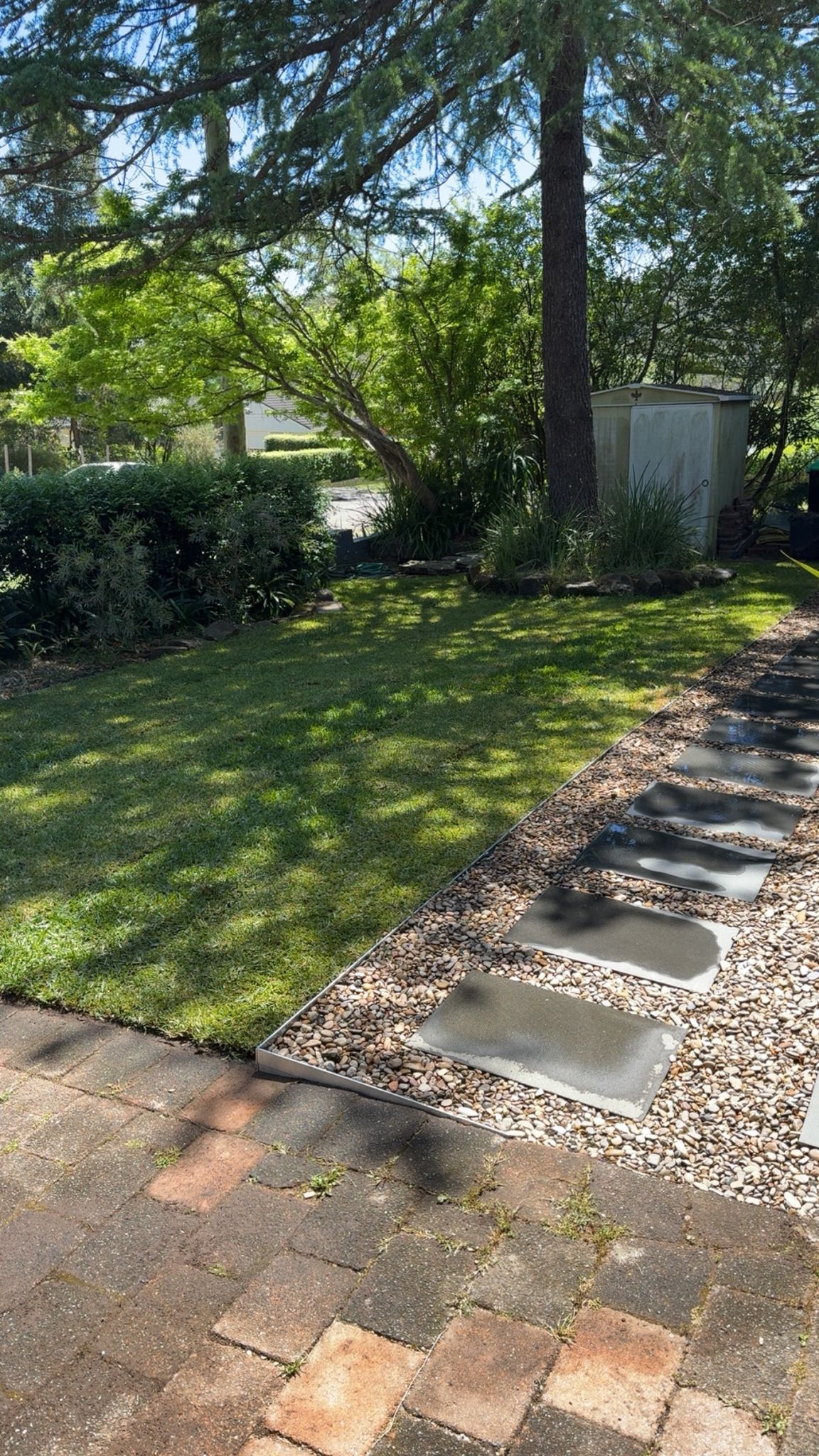
Our paving services are about getting the base right first — proper compaction and drainage underneath — so the surface on top doesn’t crack, lift or go slippery the first wet winter. We’ll help you pick a finish that looks the part without turning into a skating rink every time it drizzles, which, in this town, is more often than the tourist brochures let on.
Turf Laying: Getting Green That Actually Stays Green
There’s a particular kind of heartbreak that comes with laying fresh turf, watching it look magnificent for six weeks, and then watching it go patchy, yellow and sad by the time summer really kicks in. Usually it’s not the turf’s fault — it’s the prep underneath, the wrong variety for the aspect, or a soil that was never going to hold moisture in the first place.
Our turf laying process starts with soil conditioning and levelling before a single roll goes down, and we’ll steer you toward a turf variety that actually copes with Northern Beaches sun exposure and salt-tinged wind, rather than whatever was cheapest at the last big landscaping expo.
Landscaping and Garden Design: Where the Fun Actually Happens
Once the bones are in — cleared site, solid retaining, good paving, healthy turf — this is where the garden gets to be genuinely beautiful, not just functional. Planting design, garden beds, feature trees, outdoor entertaining zones, the works.
Our landscaping approach leans heavily on species that are proven to handle this coastline — natives that shrug off salt spray, low-water plantings that don’t need daily babysitting, and layouts designed around how your family actually uses the outdoor space, not how it looks in a single hero photo. A garden you can actually live in beats a garden you’re afraid to walk on, every time.
And this is also where our broader gardening services come in for the ongoing side of things — pruning, mulching, seasonal tidy-ups — because a garden that’s built to last still needs a bit of looking after. Built to last doesn’t mean built to be ignored.
The Yard Clean Up Nobody Wants to Do (So Let Us)
Somewhere between “I’ll get to it this weekend” and “it’s been eight months,” most Northern Beaches backyards accumulate a genuine backlog — overgrown hedges, dumped clippings, a corner that’s turned into an unofficial compost heap nobody planned for. A proper yard clean up resets the whole property, clearing the deadwood and green waste so whatever comes next — new turf, a garden refresh, or just being able to see the back fence again — actually has room to happen. It’s not the most exciting part of the process, but it’s often the one that makes the biggest visible difference on day one.
Arborist Work: The Piece Everyone Forgets Until It’s Urgent
A garden isn’t just lawn and garden beds — the trees are doing a lot of the heavy lifting, providing shade, privacy from the neighbours, and honestly a fair chunk of your property’s street appeal. But trees on the Northern Beaches also cop plenty of coastal wind, and an unassessed or poorly pruned tree is one storm away from becoming a very expensive problem.
Proper arborist care isn’t about hacking branches off when things look messy — it’s about assessing tree health, pruning with a purpose, and knowing which trees need removal versus which just need a tidy-up. It’s also council-savvy work: the Northern Beaches has tree preservation rules that catch plenty of homeowners out, and getting the right advice before you reach for the chainsaw can save you a headache (and a fine) down the track.
Putting It All Together: The Order That Actually Works
If you’re planning a garden overhaul rather than a single fix, the sequence matters more than most people expect:
- Clear and prepare the site — get rid of what’s not working before you build what will.
- Sort the retaining and levels — your slopes need to behave before anything else goes in.
- Lay the hardscaping — paths, patios and paving while access is still easy.
- Bring in the turf and planting — now that the ground beneath it is actually sound.
- Finish with the details — garden beds, feature trees, and the ongoing gardening care that keeps it all looking sharp.
Do it in this order and everything downstream lasts longer, because you’re not building beauty on top of a shaky foundation.
Ready to Get Started?
If your garden’s due for more than a quick tidy-up, or you’re staring down a block that needs serious groundwork before it’s even close to liveable, we’d genuinely love to have a look. Head over to our contact page and tell us what you’re working with, or have a browse of our blog for more on how we approach gardens across the Northern Beaches. Either way, start with the Northern Beaches Garden & Trees homepage if you want the full rundown of what we do.
Frequently Asked Questions
How long does it actually take to build a garden properly, start to finish? It depends heavily on the scope, but a full site prep-to-planting job typically runs anywhere from a few days for a smaller refresh to a few weeks for a full retaining wall, paving and turf overhaul. The groundwork stages — clearing, retaining, drainage — usually take longer than people expect, but rushing them is exactly how gardens end up needing repairs within a year or two.
Do I need council approval for retaining walls or land clearing on the Northern Beaches? Often, yes, depending on the wall’s height, the slope, and whether there are trees or heritage overlays involved. Northern Beaches Council has specific requirements around retaining structures over a certain height and tree removal on private land. It’s worth getting advice before you start digging, because retrofitting approval after the work’s done is a far more painful process than sorting it upfront.
Why does my new turf keep dying even though I water it constantly? Nine times out of ten, it’s not a watering problem — it’s a soil and preparation problem. Sandy Northern Beaches soil drains fast and doesn’t hold nutrients well, so turf laid straight onto unconditioned ground struggles no matter how much you water it. Proper soil prep, the right turf variety for your sun exposure, and a sensible watering schedule (rather than just “more”) usually solves it.
Can retaining walls actually add value to my property, or are they just functional? Both. A well-built retaining wall creates usable flat space on a sloped block — which on the Northern Beaches can mean the difference between a wasted hillside and an extra entertaining area or garden bed. Buyers and valuers both notice when a sloped block has been worked with rather than just left to its own devices.
What’s the difference between a “yard clean up” and full land clearing? A yard clean up is generally about resetting an existing but neglected garden — clearing overgrowth, green waste and clutter so the space is usable again. Land clearing and site preparation is a bigger job, usually done ahead of construction or a full landscaping project, involving vegetation removal, grading and getting a site genuinely ready to build on.
How do I know if a tree on my property needs professional attention versus just a trim? Warning signs worth taking seriously include large dead branches, fungal growth at the base, a noticeable lean that’s new, or roots lifting nearby paving or foundations. If you’re not sure, it’s worth getting a proper assessment rather than guessing — some issues are cosmetic, others are a genuine safety risk, and telling the difference is exactly what a qualified arborist is for.
Is it cheaper to do the garden in stages or all at once? All at once is usually more cost-effective overall, since machinery access, site setup and labour can be shared across stages instead of paid for repeatedly? That said, staging the work is a completely reasonable approach if budget is tight — just make sure the sequence still follows the groundwork-first order above, so you’re not paying to redo earlier stages later.