
Free Quote
Let’s be honest — most of us don’t think about our garden until it’s either a jungle or a dust bowl. It sits there quietly; doing its own thing, while all the renovation energy (and budget) goes into the kitchen splashback or the ensuite tiles. Then a real estate agent walks through, glances at the backyard, and you watch their face do that polite-but-deflated thing agents do when a garden isn’t pulling its weight.
Here’s the bit nobody tells you at the open home: on the Northern Beaches, where half the appeal of living here is the outdoors, your garden isn’t a backdrop. It’s a selling point. Buyers up here aren’t just picturing a house — they’re picturing Sunday arvo barbecues, the dog running around, maybe a hammock between two decent trees. A well-designed garden taps into that fantasy before they’ve even stepped inside.
At Northern Beaches Garden & Trees, we’ve watched plenty of properties go from “needs work” to “wow, look at this” with nothing more than smart garden design — no knock-downs, no six-figure renovations. This isn’t a fluffy inspiration piece either. We’re going to walk through exactly what makes a garden design actually add dollars to your valuation, not just look nice in photos.
Why Your Garden Carries More Weight Than You Think
Property valuers and buyers alike respond to something called “kerb appeal” — basically, the gut feeling a place gives you in the first eight seconds. But on the Northern Beaches, that feeling doesn’t stop at the front fence. Outdoor living is baked into the lifestyle here, so a functional, good-looking garden reads as extra livable square footage, not a bonus extra.
Sloping blocks, sandy soil, salt-laden winds off the coast — these aren’t small obstacles either. A garden that’s been designed with those conditions (rather than in spite of them) tells a buyer the whole property has been looked after properly. That’s the psychological trick good design pulls off: it signals low maintenance and high enjoyment in the same glance.
If you want the full rundown on what’s involved, our gardening services page breaks down everything from planting to hardscaping. But the short version is this: design is the plan, and everything after it — turf, paving, walls — is just execution.
Landscaping That Actually Suits a Coastal Block
Pinterest boards are great for inspiration, but half the “dream gardens” people save online would sulk and die within a season on a wind-exposed Mona Vale block or a shaded, sandy patch in Cromer. Good landscaping starts with reading the block, not fighting it.
A few things that separate a garden design that lasts from one that limps along:
- Zoning the space — separating entertaining areas, lawn, and garden beds so the yard feels intentional rather than “whatever fit”
- Plant selection matched to microclimate — salt-tolerant natives near the coast, shade-lovers under established trees, and hardy groundcovers on slopes that get baked in summer
- Flow between indoor and outdoor areas, which is one of the biggest value-adders valuers mention, especially with Northern Beaches homes leaning so heavily on that indoor-outdoor lifestyle
- Low-maintenance structure, because a garden that demands a full weekend every fortnight isn’t a selling point — it’s a warning sign
Get this stage right and everything downstream — the paving, the turf, the walls — has something solid to sit within.
The Hardscaping That Does the Heavy Lifting
Plants get the Instagram attention, but hardscaping is genuinely where a lot of the value sits. It’s also where a lot of Northern Beaches gardens fall apart, quite literally, if it’s done on the cheap.
Retaining Walls: Not Just for Show
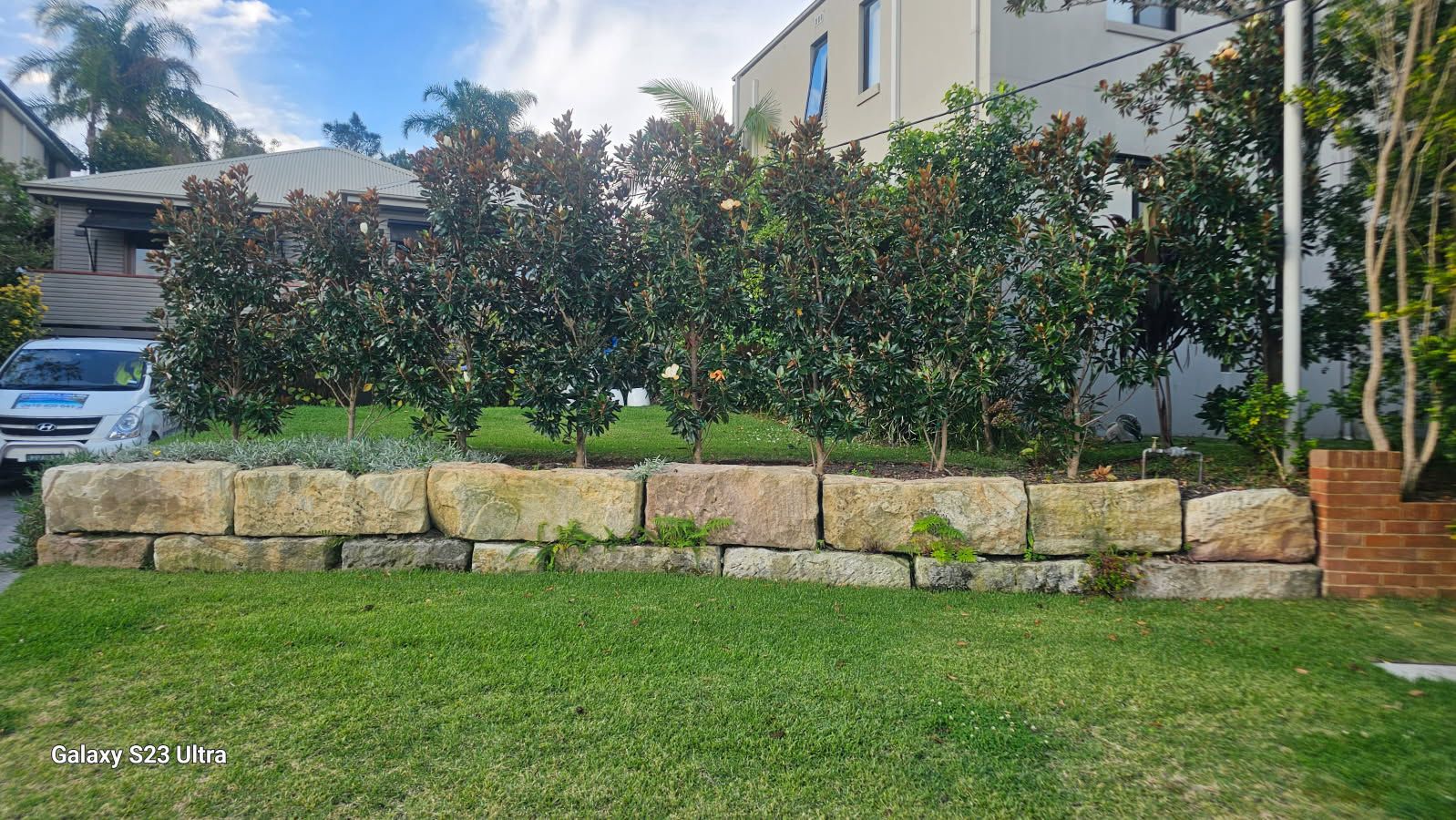
Half the suburbs up here — think Avalon, Elanora, parts of Newport — are built on slopes that would give a spirit level a headache. A properly engineered retaining wall does two jobs at once: it stops your topsoil (and your garden bed) sliding into next door’s yard after a big Sydney downpour and it carves out flat, usable space you didn’t have before. Turning a steep, awkward slope into a level lawn or entertaining terrace is one of the single biggest value-ads we see, because it literally creates useable land where none existed.
Paving That Earns Its Keep
Good paving does more than look sharp — it extends your living space outdoors and cuts down the mud-tracked-through-the-house factor that comes with sandy soil and wet grass. A well-laid path or entertaining area, done with the right materials for coastal conditions (nothing that goes slippery or salt-stained after one season), reads as low-maintenance polish to a buyer walking through.
Turf: The Unsung Hero
Nothing kills a garden’s first impression faster than patchy, weedy lawn. A properly prepped and installed lawn via professional turf laying — right soil prep, right turf variety for sun or shade — gives you that instant “this place is looked after” signal. It’s also one of the fastest, most cost-effective transformations available; a tired lawn swapped for a lush green one can change how an entire property photographs.
Before You Design: Clear the Decks (Literally)
You can’t build a great garden design on top of a mess. A lot of Northern Beaches blocks — especially older ones or bushland-adjacent properties — need proper land clearing and site preparation before any design can go in. Overgrown scrub, dead trees, old stumps and root systems all need sorting first, ideally by people who know what’s structural, what’s a fire hazard, and what’s protected under local council tree regulations (yes, that’s a real thing up here, and it trips people up more than you’d expect).
Once the block’s cleared, there’s inevitably a pile of green waste, old timber, or demolished fencing sitting around. Rather than making twelve trips to the tip in your mate’s ute, our rubbish removal service clears the lot in one go, so the site’s ready for the fun part.
Real Talk: What This Looks Like Across the Northern Beaches
Every suburb up here throws its own curveball. A Palm Beach garden needs to shrug off salt spray and coastal wind. A Frenchs Forest block backing onto bush needs sensible clearing and fire-safe plant choices. A Dee Why courtyard needs to squeeze maximum function out of minimum square metres. Mona Vale and Terrey Hills blocks are often big enough that drainage and slope become the real design challenge.
Good garden design isn’t a template — it’s a response to the specific block, aspect, soil, and how the owners actually want to use the space. That’s the difference between a garden that looks good for a listing photo and one that genuinely lifts the property’s long-term value.
So, How Much Value Are We Actually Talking About?
There’s no single magic number — it depends on the suburb, the starting condition, and how badly the existing yard was letting the side down. But the pattern holds up consistently: outdoor living space, a tidy low-maintenance garden, and solid hardscaping (retaining walls, paving, decent lawn) are repeatedly flagged by valuers and agents as factors that lift buyer interest and final sale price, particularly in a market where outdoor lifestyle is part of the pitch. Even short of selling, a well-designed garden means more weekends actually enjoying the place instead of wrestling with it.
The other upside people forget: a garden designed properly the first time costs less over ten years than one that’s patched, replanted, and redone every couple of seasons because nobody thought about drainage or sun exposure at the start.
Where to Start
If your yard’s currently more “working on it” than “wow,” the first move isn’t buying plants — it’s getting someone out to actually assess the block, the soil, the slope, and what you want from the space. From there, design flows into land prep, hardscaping, turf, and planting in the right order, rather than the classic DIY approach of buying a load of turf on a Saturday morning with no real plan (we’ve all seen that yard — the one with turf laid over builder’s rubble that died within a month).
Have a browse through our blog for more Northern Beaches-specific garden and tree advice, or if you’re ready to talk about your own block, get in touch with the team — we’re a phone call away and happy to have a chat about what’s realistic for your yard and budget.
FAQs
Does a garden redesign actually get factored into a property valuation, or is it just “nice to have”? Valuers do factor in usable outdoor living space, condition of hardscaping, and overall presentation — it’s not usually broken out as a separate line item, but it directly influences the “comparable sales” comparison and buyer perception during inspections, which flows into the final figure.
We’re on a steep block — is it worth doing retaining walls before we even think about the rest of the garden design? Generally yes. Trying to landscape, plant, or lay turf on an unstable slope is throwing money away if the earth’s going to shift after the next heavy rain. Retaining walls create the stable, usable footprint everything else sits on, so they’re usually step one, not an afterthought.
How do I know if my garden needs a full redesign or just a tidy-up? If the bones are decent — reasonable soil, no major drainage issues, a workable layout — a tidy-up (fresh turf, some paving repairs, better planting) can go a long way. If you’re dealing with erosion, dead patches, awkward slopes, or a layout that just doesn’t work for how you live, that’s a sign the underlying design needs rethinking, not just a cosmetic refresh.
Are native plants really necessary for a coastal Northern Beaches garden, or is that just a trend? It’s less about trend and more about survival rate. Salt-tolerant natives are simply more likely to thrive without constant babying in exposed coastal spots, which keeps long-term maintenance costs down — always a plus for resale.
How long does a proper garden redesign usually take, roughly, from clearing to finished turf? It varies hugely with block size and scope, but between site clearing, any retaining wall or paving work, and turf establishment, most residential projects run from a few weeks to a couple of months. Turf and new plantings also need a settling-in period afterwards before they look their photogenic best.
Do we need council approval for retaining walls or land clearing on the Northern Beaches? Depending on the height of the wall and whether trees are involved, yes — council permits can come into play, and tree removal in particular is regulated locally. It’s worth checking before work starts rather than after, which is where having an experienced local team pays off.