
Free Quote
Let’s be honest. You bought your Northern Beaches property for the view, the lifestyle, and probably a cheeky proximity to the beach. What nobody warned you about was the slope. That glorious, character-adding, “totally manageable” hill in the backyard that’s now slowly moving your garden into your neighbour’s lap.
Sound familiar? You’re not alone. Across suburbs like Dee Why, Forestville, Collaroy, Mona Vale, and Manly, thousands of Sydney homeowners are quietly watching their garden edges crumble, their topsoil vanish after every decent downpour, and their outdoor spaces shrink into unusable, awkward terrain.
The fix? A properly built retaining wall — and it might just be the single best investment you make in your property this year.
In this guide, we’re going to cover everything you actually need to know about retaining walls on Sydney’s Northern Beaches: what they are, why timber and concrete are very different beasts, when the council gets involved (spoiler: sooner than you’d like), and how to pick the right retaining wall contractor without getting burnt.
So, What Exactly Is a Retaining Wall?
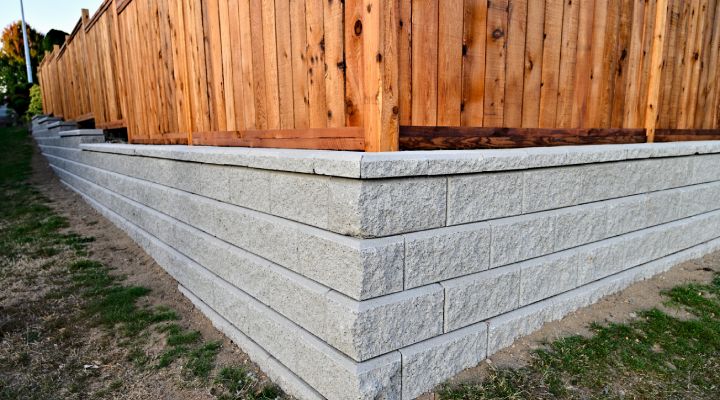
A retaining wall is a structure designed to hold back soil and prevent it from sliding or eroding down a slope. Think of it as your garden’s backbone — quietly doing the heavy lifting so the rest of your outdoor space can look beautiful and function properly.
Beyond the structural job, a well-designed retaining wall can create usable flat areas on sloped land, define stunning garden beds, protect your home’s foundation from hydrostatic pressure, and seriously lift your property’s kerb appeal.
On the Northern Beaches, where homes are often perched on sandstone ridges and clay-heavy hillsides, retaining walls aren’t a luxury — they’re a necessity. The combination of Sydney’s heavy summer rainfall, shifting clay soils, and steep residential blocks makes soil erosion one of the most common and costly problems local homeowners face.
If you’ve noticed your garden fence leaning, soil washing onto the driveway after rain, or your lawn developing unexpected “terraces” all on its own — that’s the hill talking, and it’s asking for help.
The Big Decision: Timber, Concrete, or Something Else?
When it comes to garden retaining wall installation, one of the first questions you’ll face is material choice. Each option comes with its own personality, price point, and lifespan. Here’s the honest breakdown:
Timber Retaining Walls
Timber — particularly treated pine sleepers — remains one of the most popular choices for residential retaining walls across Sydney, and for good reason. It’s cost-effective, looks warm and natural in a garden setting, and is perfectly suited to low-to-medium height walls.
When timber retaining walls work best:
- Walls under 1 metre in height
- Garden bed borders and terraced planting zones
- Properties where a natural, organic aesthetic matters
- Tighter budgets that still want a quality result
A word of caution though: not all timber is created equal. Properly treated H4 or H5 grade hardwood or pine sleepers are essential for in-ground contact. Cheap, undertreated timber in Sydney’s damp clay soils is basically a termite buffet with a use-by date of about five years. When our team installs timber retaining walls on the Northern Beaches, we use only properly graded materials with the structural integrity to back up the good looks.
Concrete Retaining Walls
Concrete — whether poured, block, or sleeper-style — is the heavy hitter. For taller walls, steeper slopes, or situations where you need decades of maintenance-free performance, concrete retaining walls on the Northern Beaches are increasingly the go-to choice for homeowners who want to build once and forget about it.
Concrete block walls in particular are excellent for:
- Walls exceeding 1 metre in height
- Driveways and areas bearing surcharge loads (cars, outbuildings)
- Coastal and high-moisture environments
- Contemporary landscaping aesthetics
Yes, the upfront cost is higher — but factor in zero rot, zero termites, and minimal maintenance over 30+ years, and the maths often works out very much in concrete’s favour.
Sandstone and Natural Stone Walls
If your property has a traditional Federation or Cottage character, sandstone and natural stone retaining walls can be absolute showstoppers. Sydney is blessed with access to gorgeous local sandstone, and a well-constructed stone wall is the kind of feature that makes real estate agents weep with joy.
Besser Block and Modular Systems
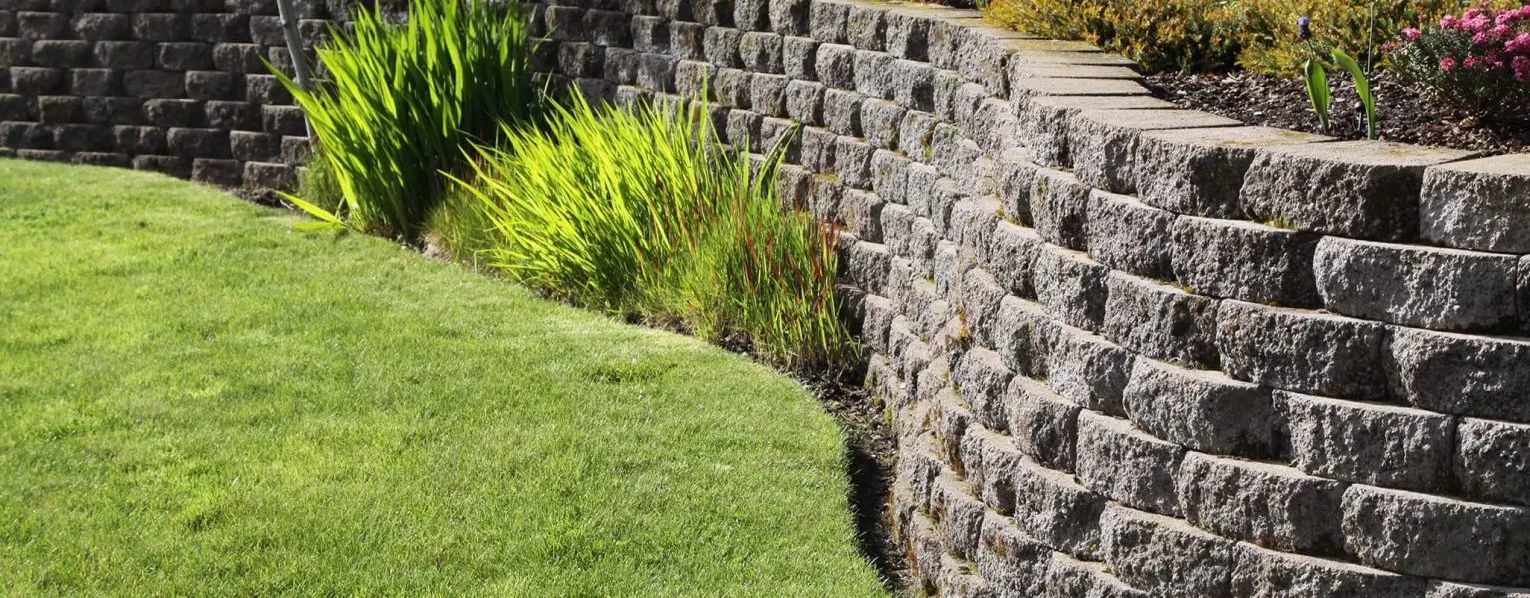
Besser blocks and interlocking modular retaining systems offer a middle ground: highly engineered, structurally reliable, and available in finishes that range from industrial-utilitarian to genuinely attractive. Great for complex slope management and terracing projects.
Five Signs You Need a Retaining Wall (Like, Yesterday)
Not sure if your situation is urgent or just “keep an eye on it”? Here’s a quick reality check:
- Soil is washing onto your driveway, path, or neighbour’s property after rain — this is active erosion and it only gets worse.
- Your existing timber sleeper wall is leaning, cracking, or rotting — an old wall that’s failing is more dangerous than no wall at all.
- You have a sloped block with no usable flat space — a tiered retaining system can transform dead hillside into genuinely liveable garden zones.
- You’re about to do a full landscaping project — retaining walls are the structural foundation that makes everything else (turf, garden beds, paving) work properly. Our landscaping services on the Northern Beaches always begin with getting the bones right, and the walls are the bones.
- You’ve recently had a new pool, deck, or extension installed — construction activity can disturb soil stability significantly.
If two or more of these hit home (pun absolutely intended), it’s time to get a professional eye on it.
What Wood Do They Use — And Why Does It Matter?
This is one of the most Googled questions around timber retaining walls in Sydney, so let’s sort it out properly.
For timber retaining walls in Sydney, the go-to materials are:
- Treated Pine Sleepers (H4/H5 grade): The most common choice for residential retaining walls. H4 is rated for in-ground contact; H5 for areas with high termite risk. Both are pressure-treated with preservatives to resist rot and insect attack.
- Hardwood Sleepers (Ironbark, Spotted Gum, Blackbutt): Naturally durable, beautiful-looking Australian hardwoods that can last 20–30 years in-ground without treatment. More expensive, harder to work with, but stunning.
- Recycled Railway Sleepers: Incredibly robust and full of character. They’re typically hardwood and have often been impregnated with creosote from their railway days, making them highly resistant to rot. Note: not ideal near vegetable gardens due to chemical content.
The key word in all of the above is grade. A wall built with the wrong timber grade will fail well before its time, which is why working with experienced retaining wall contractors — rather than a bloke with a ute and a YouTube subscription — makes a real difference.
Do You Need Council Approval? (The Part Everyone Ignores Until It’s Too Late)
Here’s where things get a little bureaucratic, but don’t skip this section — it could save you thousands.
In NSW, retaining wall council approval requirements are governed by the State Environmental Planning Policy (SEPP), but local councils add their own conditions on top. As a general rule:
- Under 600mm: Typically exempt from approval (but always confirm with your local council)
- 600mm–1m: May qualify as complying development — check with your council
- Over 1m: Almost always requires a Development Application (DA) and often an engineer’s certification
- Any wall near a boundary or drainage line: Can trigger approval requirements regardless of height
Northern Beaches Council, in particular, takes drainage and stormwater management seriously — and rightly so given the catchment-sensitive environment. Getting this wrong doesn’t just risk a fine; it can mean a council order to demolish and rebuild at your own cost.
The good news? When you work with our team at Northern Beaches Garden & Trees, we’re across the local regulations and will tell you upfront what’s required for your specific project. No nasty surprises.
How the Retaining Wall Installation Process Actually Works
So what happens when you call a decent retaining wall contractor near you? Here’s the process we follow for every job on the Northern Beaches:
Step 1 — Site Assessment We come out to your property and actually look at the problem. We assess slope angle, soil type (sandy, clay, or expansive?), drainage paths, what’s above and below the proposed wall, and any access challenges. Northern Beaches properties can be… creatively difficult to access. We’ve seen it all.
Step 2 — Material Recommendation Based on what we find, we’ll recommend the right material for your wall. This isn’t a one-size-fits-all answer — it depends on height, load, aesthetics, budget, and what’s going to hold up best in your specific conditions.
Step 3 — Approval Navigation (if needed) If your project requires council approval or engineering certification, we guide you through that process. Yes, it adds time — but it protects you legally and structurally.
Step 4 — Construction The build begins with excavation, footing preparation, and drainage installation. Getting the drainage right behind the wall is non-negotiable — hydrostatic pressure (water building up behind the wall) is the number one cause of retaining wall failure. Our installations include proper agricultural drainage pipes and gravel backfill as standard.
Step 5 — Finishing and Landscaping Integration A great retaining wall doesn’t just stand there — it becomes part of a beautiful outdoor space. Whether that means connecting to your broader garden transformation or blending into an existing landscape, we make sure the final result looks intentional and polished.
Want to see what “intentional and polished” actually looks like in practice? Our project portfolio is full of before-and-after transformations from right here on the Northern Beaches.
Why Hire Local Retaining Wall Contractors on the Northern Beaches?
This might seem like an obvious point, but it genuinely matters. Sydney’s Northern Beaches isn’t like building a retaining wall in a flat Western Sydney suburb. The terrain, the soil profiles, the proximity to the coast, and the specific requirements of councils like Northern Beaches Council all demand local knowledge.
When you search for “retaining wall contractors near me” and land on a company based in Parramatta or the Hills District, you’re rolling the dice on whether they actually understand:
- Clay soil behaviour in Northern Beaches suburbs like Forestville, Frenchs Forest, and Belrose
- Sandstone bedrock challenges in coastal areas like Manly and Balgowlah
- Stormwater and drainage expectations specific to Northern Beaches Council’s DCP
- Tight access on older residential blocks with steep driveways and narrow side passages
We’re based in Forestville. We’ve built retaining walls from Palm Beach to Manly, from Church Point to Curl Curl. We know the area because we live and work in it. Take a look at where we work — there’s a good chance we’ve built a wall in your street.
The Most Common Retaining Wall Mistakes (So You Don’t Make Them)
We see these over and over again, usually when homeowners try to cut corners or hire the cheapest quote in the market:
- No drainage behind the wall — the single biggest cause of premature wall failure. Water pressure will push over even a well-built wall if there’s nowhere for it to go.
- Incorrect timber grade — H3 timber in-ground contact in a wet area is basically composting money.
- Insufficient footing depth — a wall that isn’t properly anchored will lean or fall. Physics doesn’t negotiate.
- Ignoring council requirements — an unapproved wall that gets flagged can block your property sale, lead to demolition orders, and create insurance complications.
- Building too high in one go — some soil conditions require tiered walls with gaps between levels rather than a single tall wall. This is an engineering call, not an aesthetic one.
Retaining Wall Cost in Sydney — Setting Realistic Expectations
Everyone wants a number, so here’s a genuine ballpark (not a quote — your project specifics will vary significantly):
| Wall Type | Indicative Cost Range (per linear metre) |
| Treated Pine Sleepers | $250 – $450/lm |
| Hardwood Sleepers | $400 – $650/lm |
| Concrete Sleepers | $500 – $800/lm |
| Sandstone/Natural Stone | $600 – $1,200+/lm |
| Concrete Block | $450 – $900/lm |
These figures include installation but will vary based on wall height, drainage requirements, access difficulty, and site-specific conditions.
The cheapest option on the market is rarely the cheapest option over 10 years. A well-built concrete retaining wall at $700/lm that lasts 40 years beats a dodgy timber job at $200/lm that needs replacing in 8 years — every single time.
Ready to Stop the Slope? Let’s Talk.
If your garden is fighting a losing battle with gravity, or you’ve just been putting off dealing with “that leaning wall out the back,” now’s a great time to get on top of it before the next round of summer storms does it for you.
At Northern Beaches Garden & Trees, we’ve built retaining walls across Sydney’s Northern Beaches and North Shore for years. We’re passionate about doing it properly — the right materials, proper drainage, full compliance, and a result that genuinely improves your property.
Difficult access? No drama. Unusual slope? We’ve seen worse. Tight timeline? Let’s have a chat.
Call us on 0411 590 763 or get a free quote online. No obligation, no pushy sales pitch — just an honest conversation about what your block actually needs.
Frequently Asked Questions
How long do timber retaining walls last in Sydney? With quality H4 or H5 treated pine, you can expect 15–25 years. Hardwood sleepers can go 25–40 years. Maintenance (checking for rot, re-treating cut ends) extends lifespan significantly.
Do I need an engineer for a retaining wall? In NSW, walls over 1 metre typically require engineering sign-off. Our team can coordinate this for you as part of the project.
Can I build a retaining wall myself? Technically yes, for small walls under 600mm. Realistically, anything larger involves drainage engineering, footing calculations, and council compliance that’s best left to experienced professionals. We’ve repaired more than a few DIY walls that didn’t go to plan.
How long does retaining wall installation take? A standard residential retaining wall installation on the Northern Beaches typically takes 1–5 days depending on scale, access, and material. We’ll give you an accurate timeline during your site assessment.
What’s the difference between a retaining wall and a garden edging wall? Garden edging is purely decorative — keeping mulch in, defining beds. A retaining wall is structural — it’s holding back tonnes of soil. They need to be designed and built very differently.
Northern Beaches Garden & Trees — Retaining Wall Builders Serving Sydney’s Northern Beaches, North Shore, and surrounding suburbs including Forestville, Dee Why, Manly, Collaroy, Mona Vale, Balgowlah, Frenchs Forest, Belrose, Curl Curl, and Palm Beach.